The most obvious cost occurs when a technician is required to prematurely scrap or repair fully functional components. This happens because a serviceable part is expected to reach the defined limit between now and the next inspection interval. Since these intervals can be quite far apart, the margin of error at each limit is set quite high, resulting in costly material waste. For wheelsets as an example, this can mean millions of dollars in additional costs over the 30-year life of the vehicle – a figure that can eclipse labor savings costs by an order of magnitude. These material wastages could be reduced by more than 50 percent through automated vehicles inspection systems (AVI). Thanks to continuous monitoring of the vehicle, unnecessary maintenance activities can be avoided, and the service life of individual components optimized until the technical wear limit is reached.
A second expensive effect of manual measurement systems are the lower detection rates for anomalies. Left unidentified these issues start as minor defects and can fast become expensive unplanned repairs while waiting for the manual inspection date to arrive. The net effect is both an increase in unplanned maintenance costs and a reduction in availability. Depending on the contract structure the latter may result in a loss of revenue or worse, a direct hit to the bottom line with penalty payments stacking up. With the vehicle condition data obtained from an AVI, a better understanding of wear patterns can be achieved, and anomalies can be detected at an early stage so that maintenance activities can be optimized.
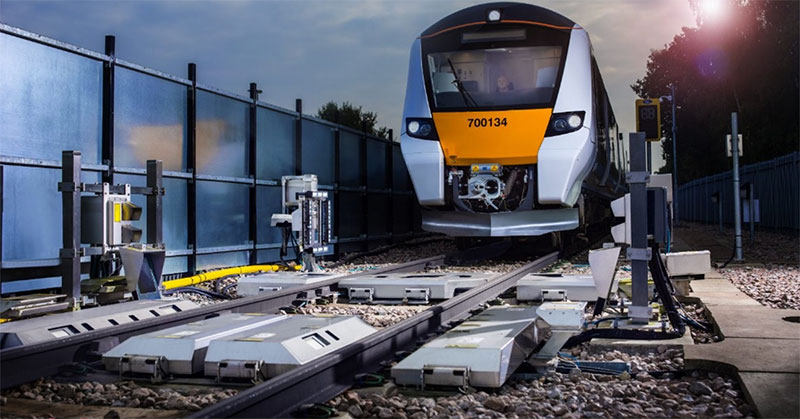
Given the above, the business case for investment in automated measurement systems can be quite compelling and the demand for this is shown by the rapid adoption of automated vehicles inspection systems in modern depots such as Dortmund-Eving (Germany) and Hornsey (Great Britain). That is why rolling stock maintenance providers rely on Siemens Mobility to provide a range of contactless automated measurement systems, known as VEMS (Vehicle Equipment Measurement Systems).
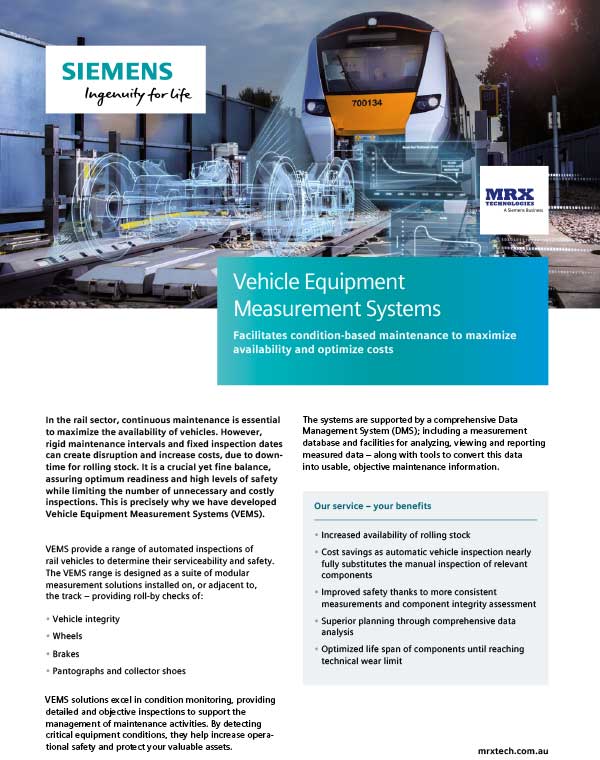
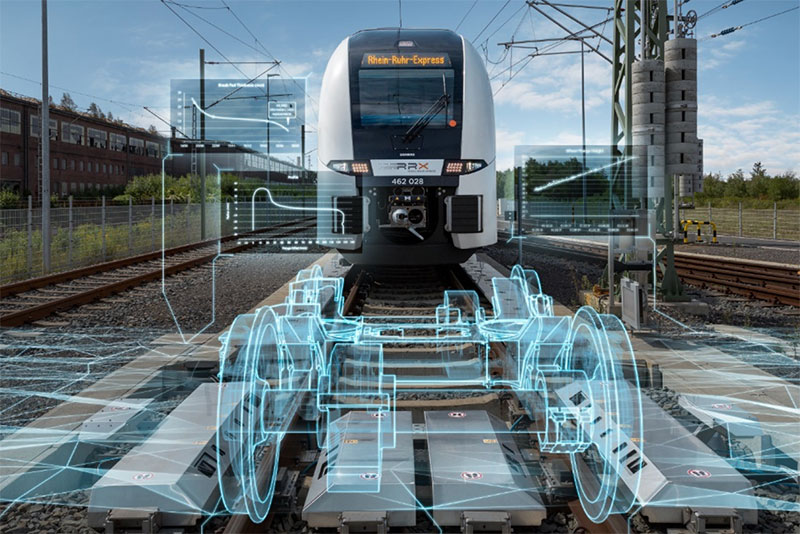
The VEMS range is designed to offer customers one or more modular measurement solutions installed on, or adjacent to, the track – providing contactless roll-by checks of:
- Wheels
- Brakes
- Pantographs
- Collector Shoes
- Visual Inspection (VIS)
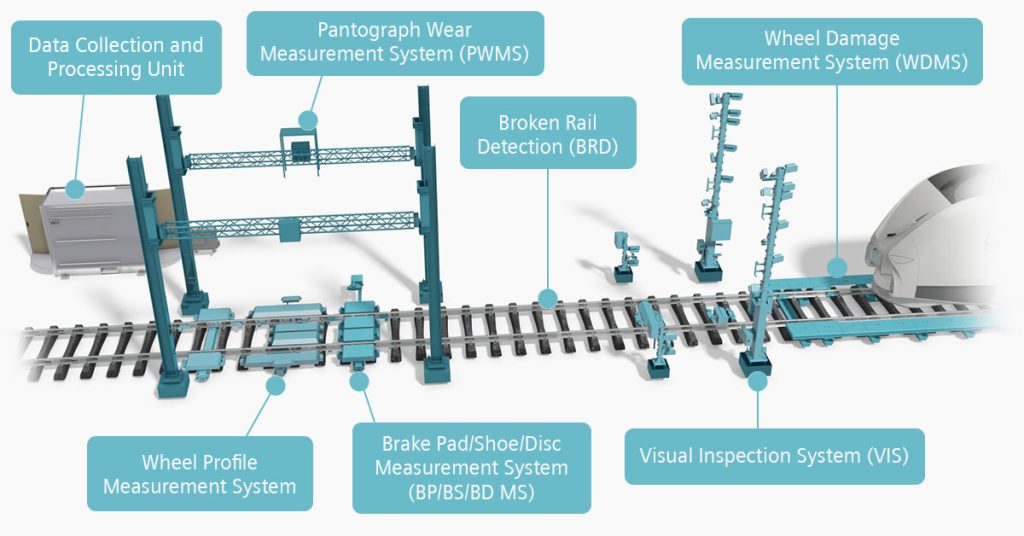
The data obtained from the individual VEMS systems are supported by a comprehensive Data Management System (DMS) allowing the operator’s maintenance engineers to understand the exact status of each component and what may require attention, for each item of rolling stock. This not only reduces unplanned downtime but also improves maintenance scheduling, rolling stock availability and removes unnecessary stock holding as a result of optimizing the lifespan of components. Additionally, all measurement data can be securely encrypted and transmitted to Railigent, the platform for managing your rail assets smarter. By integrating data in Railigent and by adding algorithms, optimized timing of maintenance tasks can be achieved (predictive maintenance).
Improving the Workflow of the Entire Depot
The data obtained from the individual VEMS systems are supported by a comprehensive Data Management System (DMS) allowing the operator’s maintenance engineers to understand the exact status of each component and what may require attention, for each item of rolling stock. This not only reduces unplanned downtime but also improves maintenance scheduling, rolling stock availability and removes unnecessary stock holding as a result of optimizing the lifespan of components. Additionally, all measurement data can be securely encrypted and transmitted to Railigent, the platform for managing your rail assets smarter. By integrating data in Railigent and by adding algorithms, optimized timing of maintenance tasks can be achieved (predictive maintenance).
Simplifying Implementation
The data obtained from the individual VEMS systems are supported by a comprehensive Data Management System (DMS) allowing the operator’s maintenance engineers to understand the exact status of each component and what may require attention, for each item of rolling stock. This not only reduces unplanned downtime but also improves maintenance scheduling, rolling stock availability and removes unnecessary stock holding as a result of optimizing the lifespan of components. Additionally, all measurement data can be securely encrypted and transmitted to Railigent, the platform for managing your rail assets smarter. By integrating data in Railigent and by adding algorithms, optimized timing of maintenance tasks can be achieved (predictive maintenance).
https://vimeo.com/534763210