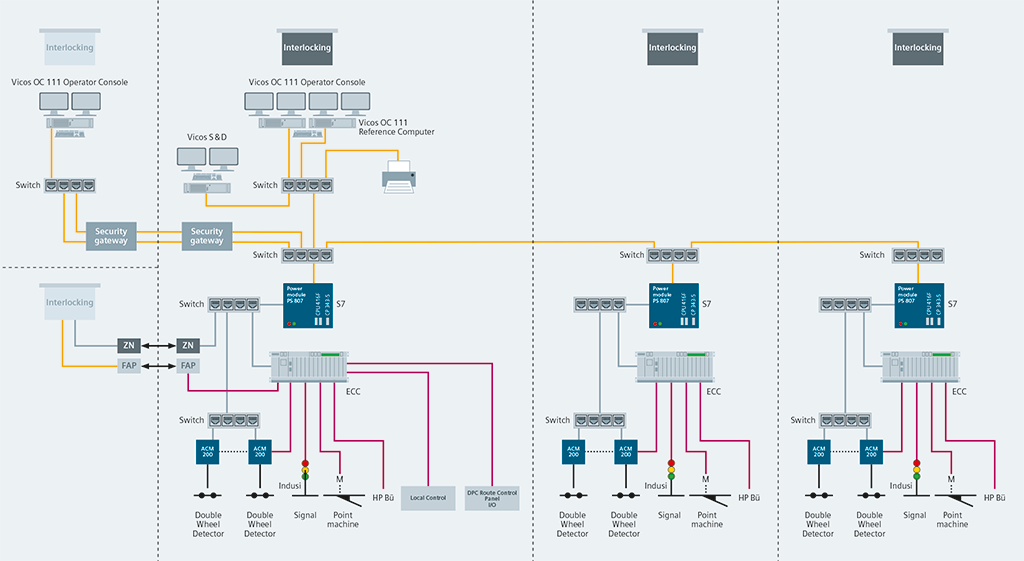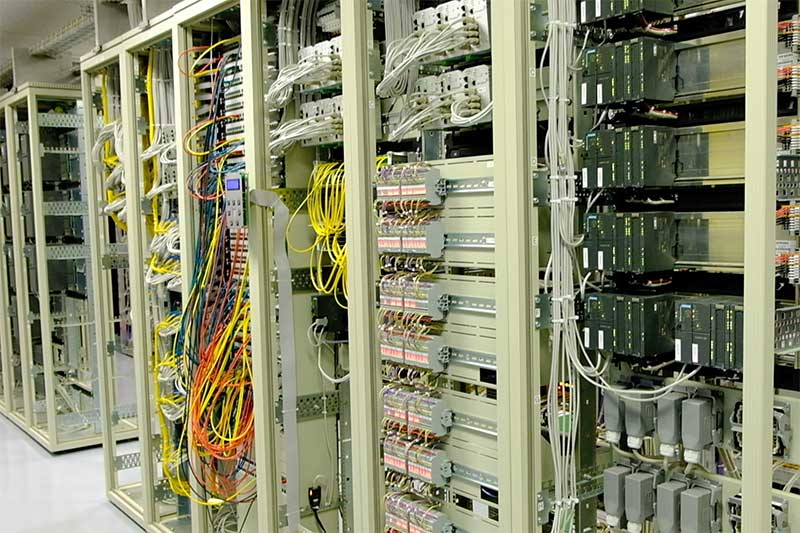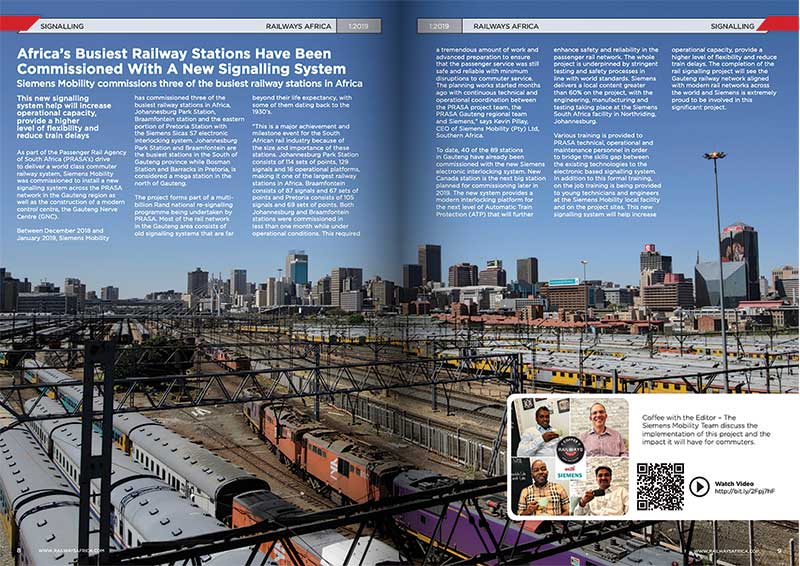
Siemens is a global leader in the supply of signalling technology and associated rail infrastructure. In South Africa, Siemens Mobility has been contractually involved with the upgrade of the obsolete signalling for PRASA in Gauteng since 2011. Two contracts were awarded to Siemens Mobility to replace the signalling and train control systems in Johannesburg and Pretoria, which included the delivery of SICAS S7 electronic interlocking system, the Gauteng Nerve Centre, ACM 200 Axle Counting Systems and BSG9i Points Machines, among other items.
No one is blind to that fact that the signalling system in South Africa is obsolete and no longer meeting the commuter transport needs of the country. The Gauteng region, probably the most adversely affected, just based on its size and the number of passengers, often makes headlines. Manual authorisation, currently a standard method for train authorisations, in Gauteng anyway, is about to be a thing of the past. To the relief of passengers, PRASA and the Railway Safety Regulator.
At the time of the initial contract, it was noted that the new Railway Signalling System and construction of the Train Control Nerve Centre will enhance operational capacity and allow higher flexibility, improved safety, reduce train delays and remove human error factors.
PRASA set in motion the priority areas for the introduction of the new signalling system in high-volume priority corridors which are; Naledi in Soweto; Pretoria to Johannesburg; Mabopane to Pretoria; Mamelodi to Pretoria.
These type of projects are not only massive from an investment perspective, but they also take time to execute and South Africa has a somewhat complicated regulatory environment which can sometimes lead to delays in implementation.
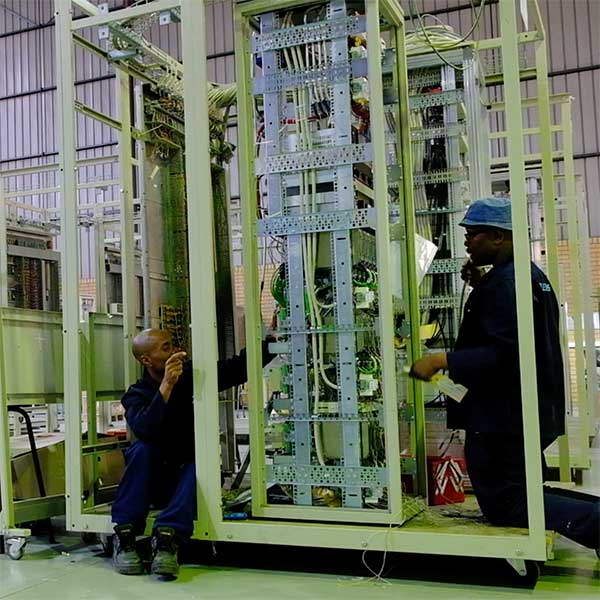
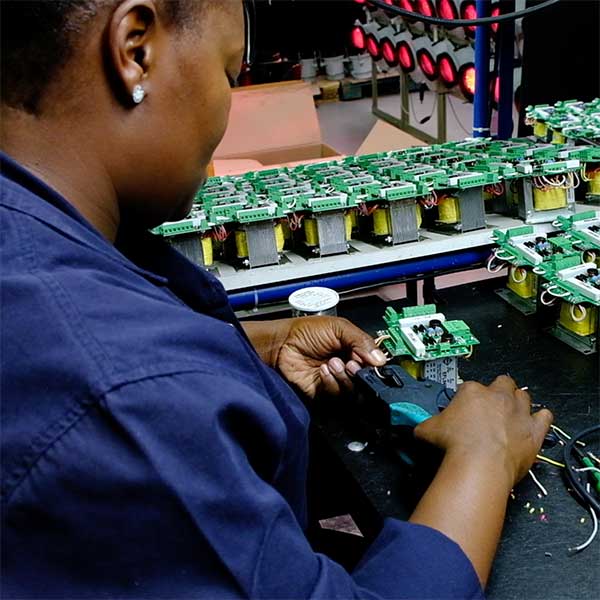
But, let’s take a step back and appreciate the intricacies involved in this resignalling project, and how it has all come together – through local participation, local manufacturing, skills development, job creation and the expertise required to execute.
The Gauteng Nerve Centre
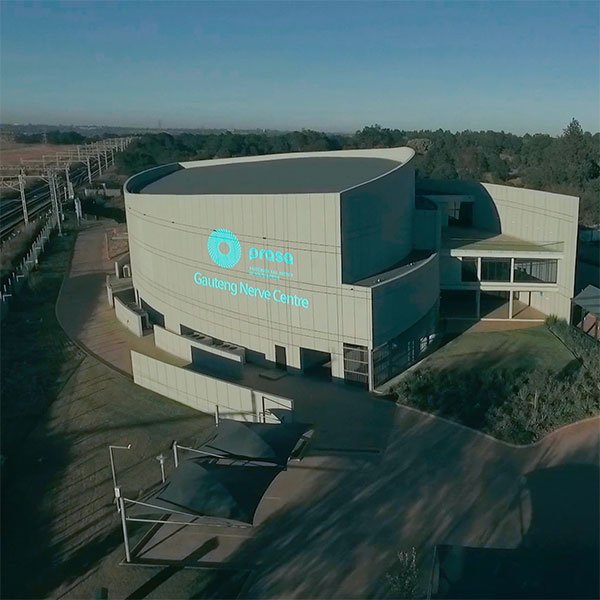
Siemens was commissioned to build the new command centre bringing together all the existing control rooms to one location. The Gauteng Nerve Centre (GNC) as it is known, is the core component of South Africa’s largest signalling project, and was built and delivered in just over two years.
Situated on 8,500m2 near the Kaalfontein Station, the 3,400m² building serves as the “eye” that overlooks the entire PRASA network. The GNC provides a central location to manage and control the commuter train movement within Gauteng. And, integrates all essential auxiliary services required to efficiently manage train service.
The GNC will provide greater efficiencies in the not-too-distant, future rail operations and train safety while offering a more frequent service through higher line capacity.
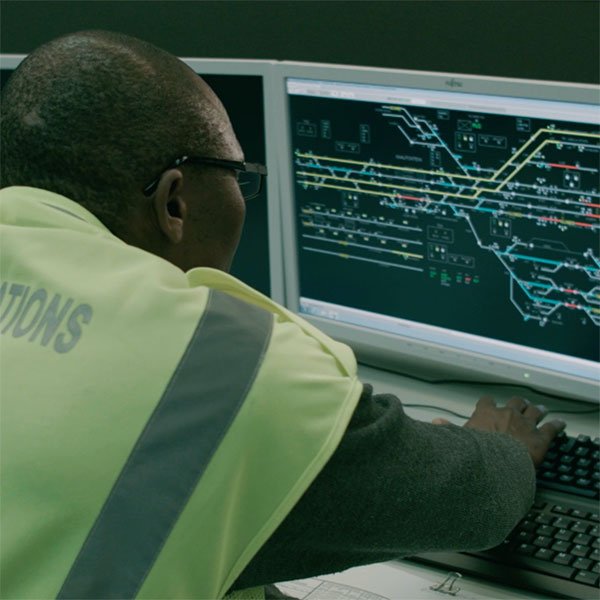
The heart of the centre; the command room is equipped with a 52m long video wall used for the monitoring of train movements, the display of the traction electrical supply as well as weather and other operational information. Train movements are controlled from 30 multi-screen workstations each equipped with an integrated communication module consolidating telephone, trunk radio and GSMR communication.
The centre also incorporates; Passenger Information Systems, Overhead Track Equipment monitoring, CCTV monitoring of stations, training room and a crisis control room. Also included are technical room, workshop and maintenance areas, press room, storage of paper and electronic records. The facility is designed to operate 24 hours a day, seven days a week and is equipped with many redundant systems to ensure uninterrupted service.
Two separate electrical supplies, supported by 2 x 800 KVA diesel-powered Rotary uninterrupted power supplies, each able to provide power to the GNC for up to 48hrs. The communications fibre network is fed from a ring system with redundant hardware to minimize network interruption.