What Is a Depot and Why Do We Need Them?
If you are thinking that this is just where the train sleeps at night, you would be mistaken.
Rail depots are highly specialized inspection and maintenance facilities, which operate under tight time frames to ensure fleet availability and operational safety. From the moment the train arrives at the depot, to the time that they leave, the complete depot solutions offered by Siemens Mobility, ensure that your fleet is in safe hands and in turn provides the desired level of availability for continued uninterrupted operations.
Patrick Moodley Head of Sales, Siemens Mobility South Africa, explains that “You would see the need these days for a turnkey provider to design, build and construct the depot and in that aspect, Siemens Mobility is a global leader. Because we are an OEM and manufacturer of trains we understand the demands of the rail operator and what they need to keep their fleet running optimally at all times.
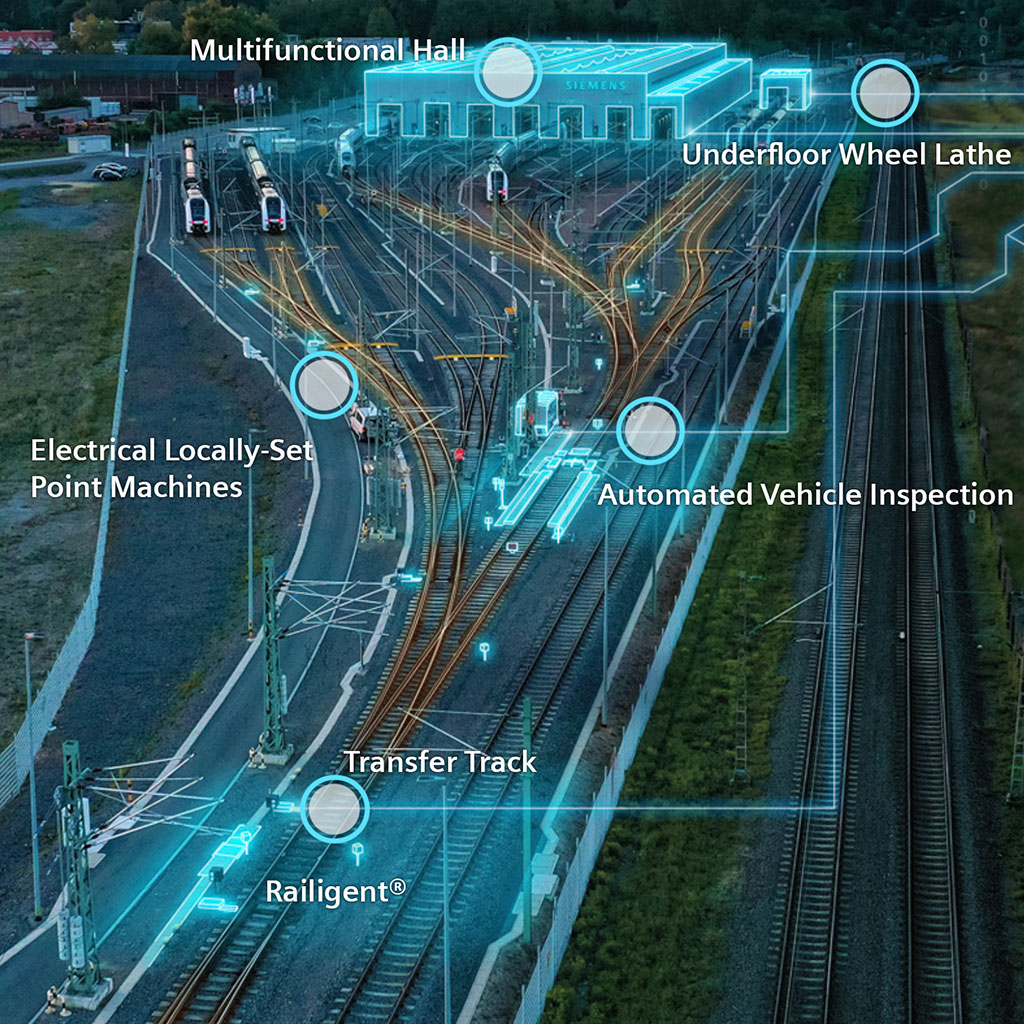
“The most important aspect of this is to take care of the maintenance of the fleet. When we talk about maintenance in the passenger environment, we have a limited amount of time in order to execute this maintenance, especially with a fleet running a normal service. For example, if the fleet operates between 05:00 to 21:00, then there is a limited amount of time between from 21:00 to execute the required routine and preventive maintenance on the fleet before the first train at 05:00. “The traditional way of maintenance has changed a lot, and this has brought about the idea that depots need to be smarter, more modern and need to have the technology to be able to cater for the ever-changing digitalization aspects of the fleets.”
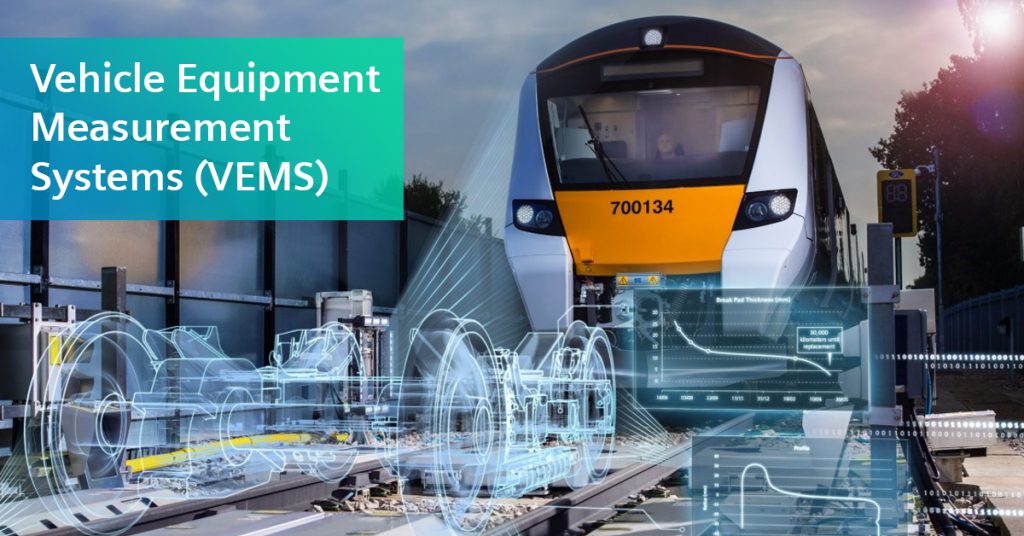
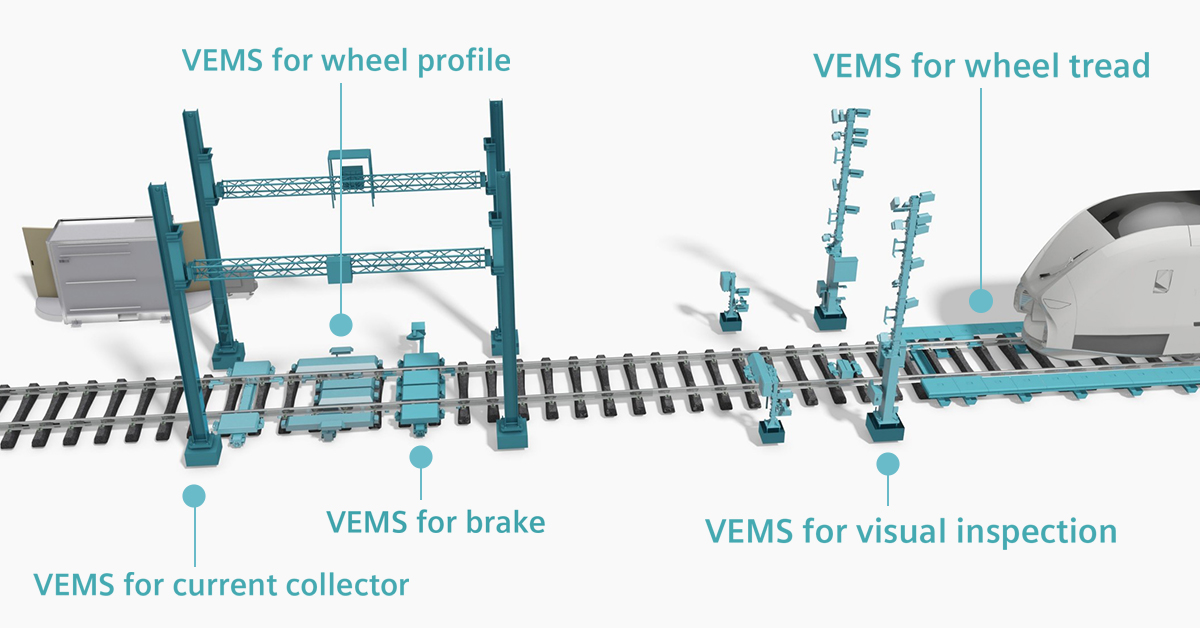
The digitalization aspect of a depot starts the moment the train arrives. Be it a new depot or a modernized depot, it would be equipped with technology to analyze the fleet as it comes in. The Siemens Mobility technology such as AVI – Automatic Vehicle Inspection or VEMS – Vehicle Equipment Measurement System, which is part of our MRX technology portfolio and integrates with our Railigent platform. This technology uses highly sophisticated sensors, cameras and infrared technology that scans through the fleet (AVI or VEMS) as it arrives. That information is passed onto a Data Management System that processes the information.
In essence, what this does is establish if a train or component either has an issue or will have an issue at a later stage. This proactive approach to respond to incidents on a fleet ensures that each train is reliable and safe for the next morning to carry passengers to their destination.
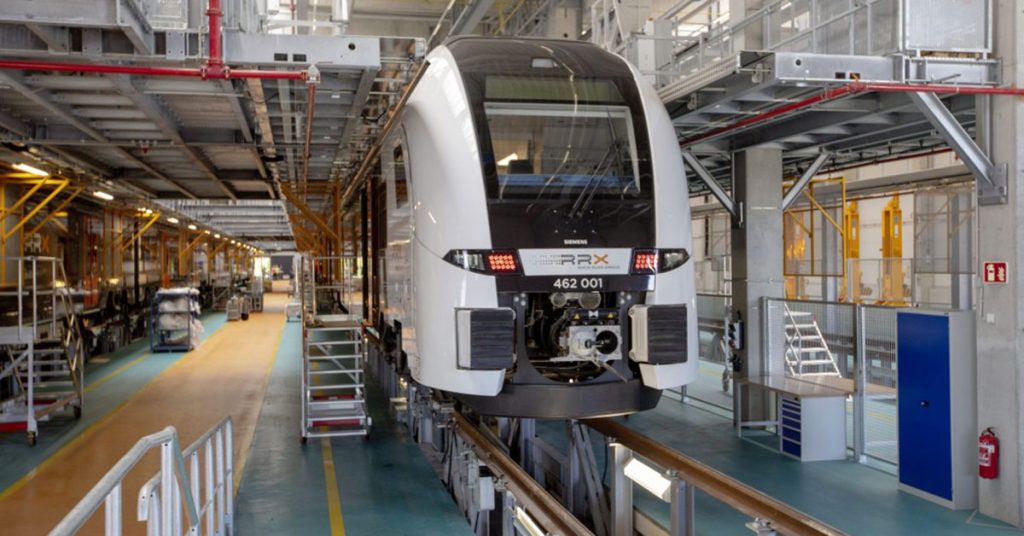
A brand new depot does not always have to be the solution. In the case of South Africa where the Passenger Rail Agency (PRASA) is currently accepting delivery of their new fleet, the ability to upgrade and modernise existing facilities is entirely doable.
Patrick notes that, “The majority of the depots we need are already built – they may be slightly smaller especially here in South Africa, but we have depots to house the existing fleet. We can look at the existing setup of a depot, be able to understand the needs of the new fleet and then tailor our solution through simulation providing the customer with exactly what they need.
“One of things that we do take into consideration is we ensure that our depots are scalable where we can improve the capacity, so when the operator needs a new fleet, they can use the existing technology, or we can upgrade at that point. When we do these designs, we take into consideration how the operator is running their schedule, how many trains and when they run.”
Depot Solutions for Freight and Passenger
Considering Africa has a lot of mixed traffic and the majority of the operators in Southern Africa and the rest of Africa transport freight and passengers on the same lines, the depot solutions offered by Siemens mobility cater for both the passenger and freight market. The technologies are similar and can be tailored to suit the customer’s needs.
Siemens Mobility not only has the depth of experience and the technology in rolling out depots solutions, but enables the customer to deliver safe, reliable and predictable services.
https://vimeo.com/527773281
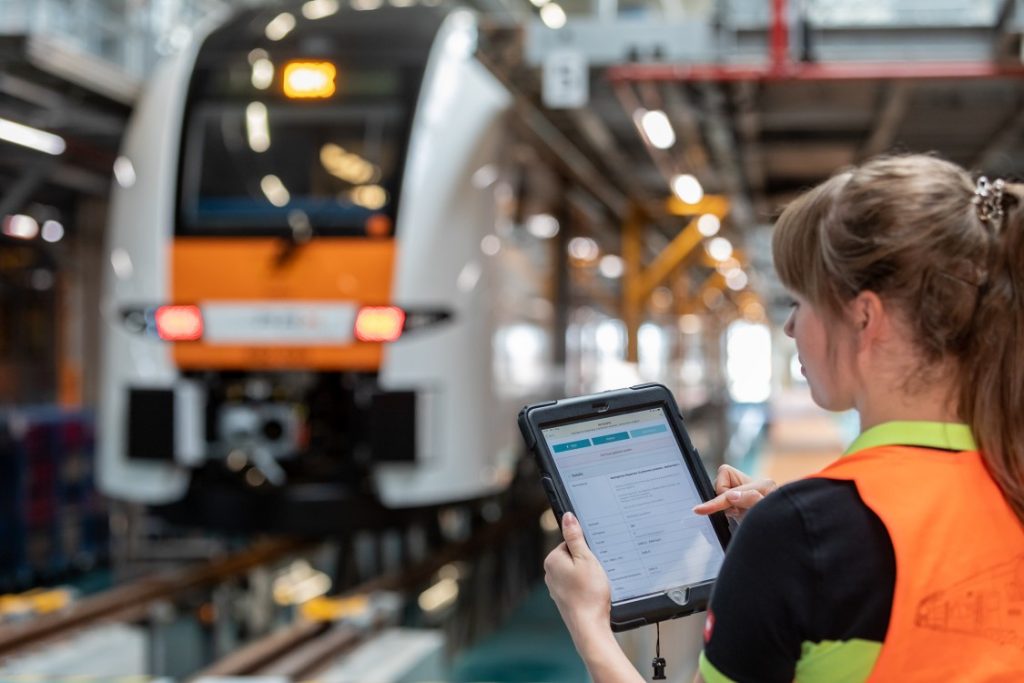
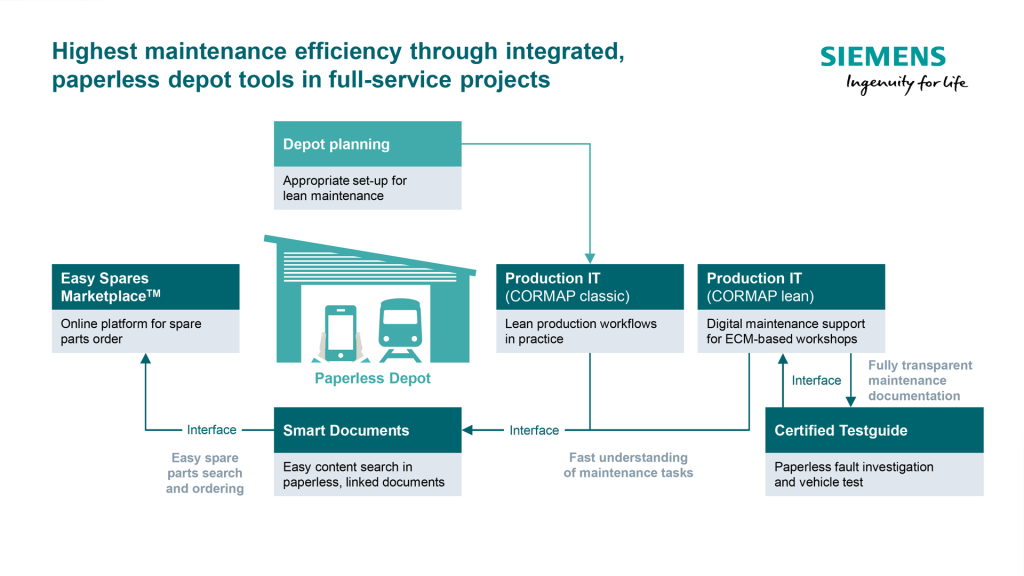
Digitalization - Harnessing the Efficiency of a Paperless Depot
Digitalization, the Internet of Things and the 4th industrial revolution might be buzz words we hear often, but in practice, this is the reality of modern, efficient depots, where everything is connected.
Automatic and paperless documentation covers tasks such as scheduling, maintenance, orders, spares, tracking, testing and certification, among other elements. Not only does this significantly reduce human error it also means that records are easily accessible and that workflows are streamlined to achieve the highest level of efficiency.
Communication and coordination between all parties from the on-site team, suppliers through to the customer become highly visual through graphical representation and transparent process, allowing for full audibility and accountability.
The Siemens Mobility service offering covers the entire spectrum of providing an advanced depot, from initial planning through to-schedule execution and delivery of the technical components to reliable maintenance and training of qualified personnel.
“From a Siemens Mobility perspective, we do get involved in depots requiring upgrades as well as depots that need to be a full turnkey project from initial stages where we need to do the design, build, testing, commissioning and then releasing to the operator themselves,” explains Patrick.